Get Started: Detroit's Energy and Water Tracking Law
Energy benchmarking is the practice of tracking a building’s energy usage and using a standard metric to compare the building’s measured energy performance over time and to similar buildings nationwide.
Building owners can access their building’s energy performance data and track it over time and/or compare it to other buildings using ENERGY STAR® Portfolio Manager®.

Portfolio Manager will give your building a score from 1 to 100. The higher the number, the more efficiently your building uses energy. The score will allow you to compare energy usage year-to-year and understand the energy savings from efficiency improvements.
Energy efficiency is leading way to reduce utility bills.
In November 2023, Detroit City Council unanimously passed the Benchmarking Ordinance, requiring buildings with more than 25,000 square feet of space to report their annual energy and water usage to the City of Detroit. This policy gives building owners and the City valuable information to better understand energy use, identify opportunities for efficiency improvements, and reduce greenhouse gas emissions.
Energy benchmarking can also help building owners:
- Reduce energy costs: Rising energy costs mean that energy now represents a significant portion of operating budgets for buildings across the nation. Tracking and comparing energy use can help owners identify opportunities to reduce consumption and lower operating costs.
- Improve building performance: Using energy benchmarking has been shown to drive energy efficiency upgrades, reduce energy use, and increase occupancy rates and property values.
- Achieve recognition: Qualifying buildings can earn ENERGY STAR® recognition. Registered buildings that reduce year-over-year energy or water use are eligible for recognition at the City level (Detroit Energy Challenge) or the State level (MI Battle of the Buildings).
Benchmarking buildings is also a critical step towards Detroit’s sustainability goals. According to the 2023 Detroit Climate Strategy, buildings account for more than 62% of Greenhouse Gas emissions in the City of Detroit. That’s the biggest piece of the pie! Improving the energy performance of buildings represents one of Detroit’s biggest opportunities to reduce emissions.
This ordinance support and advances goals established in the 2019 Detroit Sustainability Action Agenda, the 2023 Detroit Climate Strategy, the 2022 MI Healthy Climate Plan, and the 2016 UN Paris Agreement. Together, these initiatives recognize that improving building efficiency is essential to reducing emissions, lowering energy costs, and creating a more sustainable future in Detroit.
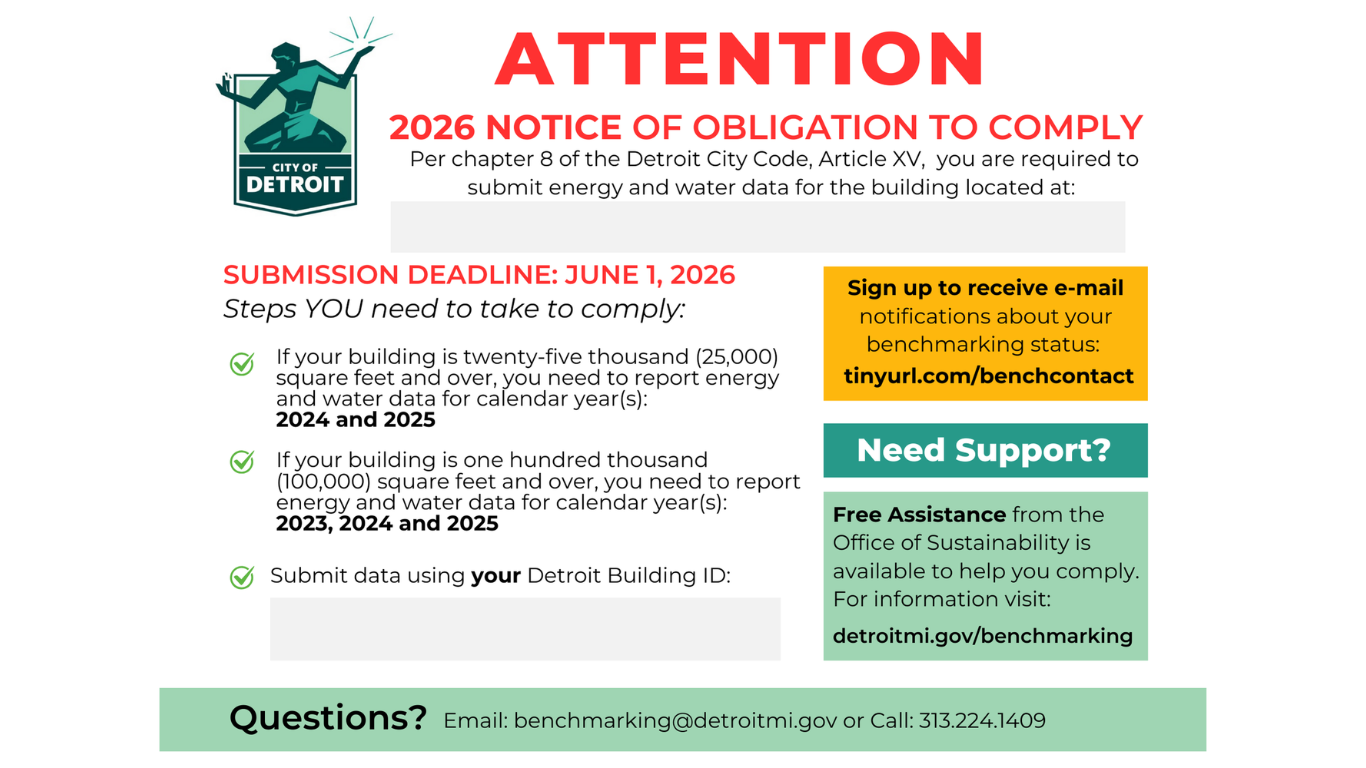
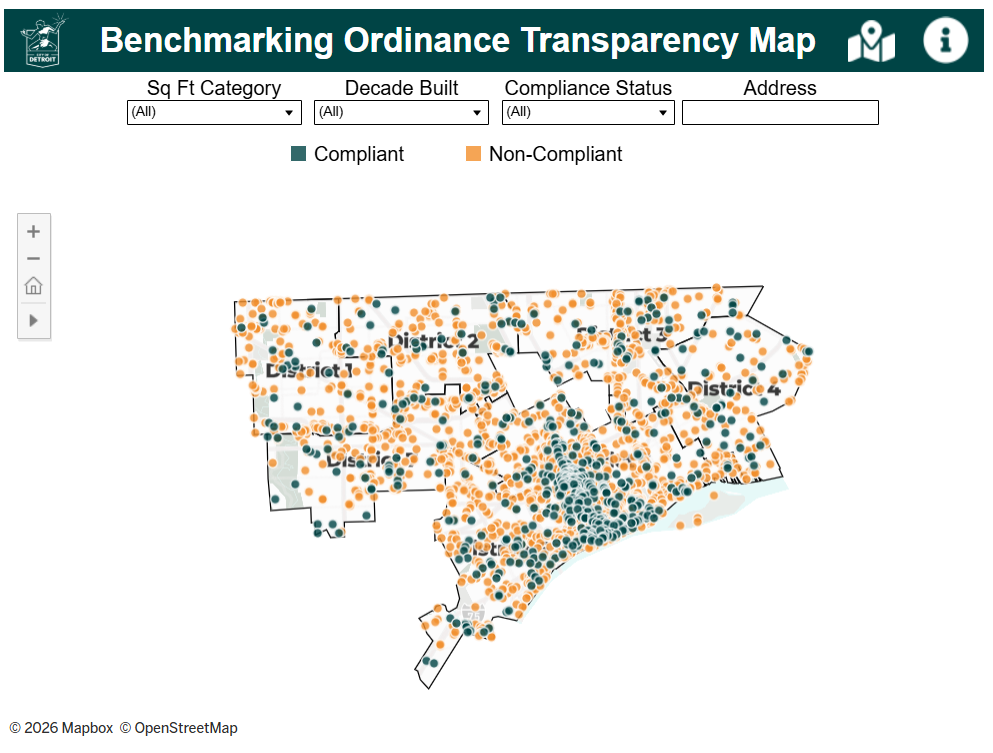
If your building is larger than 25,000 square feet and is in the City of Detroit, this ordinance applies to you. To find out more about your building, please use the Detroit Building ID lookup tool.
If you have received this postcard, you are required to comply with this ordinance.