
Detroit recognizes buildings in compliance with the Energy and Water Benchmarking Ordinance and launches public map to track progress
- 556 buildings out of 2,500 now compliant: Detroit's building energy and water benchmarking ordinance has surpassed a major participation milestone, reflecting growing engagement from building owners citywide.
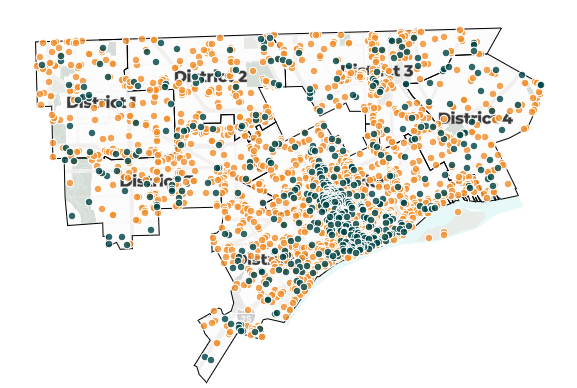
- New public compliance map is available: Residents and building owners can now search by address to view real-time building compliance status through an interactive online map.
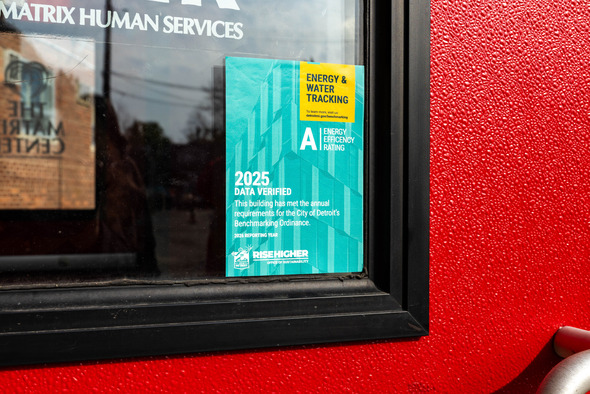
- Top performers recognized: The City is highlighting buildings that earned an ENERGY STAR score of 75 and higher with a compliance window decal and a grade of "A," showcasing leadership in energy efficiency during National Energy Awareness Month.
The City of Detroit’s Office of Sustainability announced that more than 500 buildings are now in compliance with the city’s building energy and water benchmarking ordinance. Passed unanimously by City Council in 2023, the ordinance requires buildings 25,000 square feet and greater to report their annual energy and water use through ENERGY STAR Portfolio Manager. To remain in good standing, owners must enter or automate twelve months of electric, gas, steam, and water data each year. After three years of extensive outreach and education and to mark this milestone, compliance decals are being mailed to buildings in compliance with a special recognition to buildings scoring an “A” for energy efficiency.
In addition, the Office of Sustainability launched an updated interactive map enabling residents and building owners to view compliance status for all buildings required to comply. The compliance map will be updated regularly as buildings reach compliance. The map is available at detroitmi.gov/benchmarking. Buildings listed “non-compliant” are encouraged to report their data as soon as possible or risk a blight ticket issued to their property.
“As we transition into colder months, the simple step of reporting energy and water usage gives building owners the visibility they need to identify waste and prioritize upgrades that can save them costs,” said Tepfirah Rushdan, Director of the Office of Sustainability. “This critical first step is making our buildings more efficient and resilient over time and is a key tool to improve building performance”
Among the buildings with consecutive years of complete data, the City is recognizing facilities that serve as community pillars, including the St Paul of the Cross Passionist Retreat Center (23333 Schoolcraft), the Matrix Center (13560 E McNichols Rd), St. Suzzane Cody Rouge CRC (19321 W Chicago), and La Joya Gardens (4000 W Vernor Highway). In addition, the City is mailing special decals with the letter grade “A” to buildings that earned an ENERGY STAR score of 75 and higher, to recognize top energy performance.
The Energy and Water Ordinance is a policy lever supporting the “Accelerating Energy Efficiency and Reducing Waste” goal in the Detroit Climate Strategy. The City is leading by example in energy management by actively tracking energy use across municipal buildings. The portfolio spans a wide range of facilities of all sizes, including Police Department (DPD), Fire Department (DFD), Recreation (REC), General Services (GSD), and other City facilities.
Since the ordinance's launch in 2023, the City has partnered with utilities and community organizations to simplify compliance and expand data access for building owners. Building on this momentum, the Office of Sustainability is announcing the establishment of a benchmarking services directory and is asking energy management companies to become well versed on the ordinance requirements, pass a quiz, and join the directory which will launch to the public in January 2027 ahead of the June 1, 2027, deadline for 2026 energy and water data. Service providers interested in joining the directory and building owners seeking assistance to be in compliance, can learn more at detroitmi.gov/benchmarking.
About the Program: Detroit's benchmarking ordinance requires buildings, of all types, 25,000 square feet and larger to track and report annual energy and water use, to promote energy management and efficiency investments citywide.