Register now

HDC Site Improvements - Fences, Paving, and Landscaping
block-detroitminew-views-block-news-events-block-1,News & Events*block-detroitminew-views-block-related-links-block-1,Related Links*block-detroitminew-views-block-video-playlist-block-1,Videos*documents-block,Documents*block-detroitminew-views-block-forms-block-1,Forms*block-views-block-faq-block-1,FAQs*block-detroitminew-views-block-district-map-block-1,District Map*block-views-block-council-office-directory-block-1,Office Directory*block-detroitminew-views-block-contacts-block-3,Contacts*block-detroitminew-views-block-contacts-block-4,Contacts*block-detroitminew-views-block-council-member-bio-block-1,Bio*block-detroitminew-views-block-sub-sections-block-1,Sections*block-detroitminew-views-block-web-apps-block-1,Web Apps*block-detroitminew-views-block-news-events-block-4,News*block-detroitminew-views-block-news-events-block-3-2,Events*block-detroitminew-views-block-contacts-special-block-1,Staff*block-detroitminew-views-block-statements-block-1,Statements*block-detroitminew-views-block-newsletters-block-1,Newsletters*block-detroitminew-views-block-newsletters-block-3,Ordinance*block-detroitminew-views-block-newsletters-block-2,Resolutions*block-detroitminew-views-block-newsletters-block-4,Memos
Historic Design Guidelines for Site Elements
City of Detroit - Historic District Commission
Table of Contents:
- Introduction to Historic Design Guidelines for Site Elements
- Introduction
- Applicability
- General Principles
- Use of the Guidelines
- Landscaping
- Grading/Topography
- Introduction - Why important
- Historic Features
- Examples of correct and incorrect Grading
- Vegetation
- Trees
- Other Plantings
- Other Site Element Considerations
- Accessibility
- Health and Safety
- Environmental
- Energy Efficiency
- Grading/Topography
- Landscape Structures, Furnishings & Lighting
- Fences, Walls, and Hedgerows
- Site Furnishings: Arbors, Furnishings
- Water Features
- Landscape Lighting
- Security Features
- Paving
- Streetscapes: Residential, Non-residential and Mixed-use
- Driveways and Parking (Curbs)
- Sidewalks and Walkways
- Patios
- Resources
- Definitions
- Reference Material
- Contact Information
Introduction to Historic Design Guidelines for Site Elements
Why are Site Elements in Historic Districts important?
Historic landscapes are composed of features/elements which are organized in space, including small-scale features such as fences, shrubs or statuary, or patterns in a neighborhood such as tree-shaded, brick-lined streets, which define the spatial character of the landscape. Larger, organizational elements in the landscape can create historic land patterns and refers to organization of the landscape like rooms in a house. This spatial organization may go beyond the limits of your property, but have a relationship to your neighbors- such as the topography of your front lawn all sharing a slope to the front walkway. The overall arrangement and the interrelationship of these features, or site elements, as they existed during the period of historic significance are critical assets in preserving the cultural landscape and the neighborhood’s identity.
The uniform pattern and relationships of front lawns, building setbacks and open spaces, street trees, fencing and sidewalks contribute to a collective impression of a historic district. When historic landscape features are removed or relocated, or elements that are not compatible with the site are introduced, site vistas are destroyed, and the historic character of a district is diminished. One need only recall the great American elm trees that formed natural green canopies over the streets of so many Detroit neighborhoods up until the 1950s and how the disappearance of those trees had impacted the character of those neighborhoods to understand this concept.
The Historic District Commission has complied these design guidelines to assist you in the following Site Element categories:
- Landscaping
- Grading/Topography
- Vegetation: Trees and Plantings
- Accessibility, Health/Safety, Environmental and Energy Efficiency
- Landscape Structures:
- Fences, Walls, and Hedgerows
- Site Furnishings: Arbors and Furnishings
- Water Features: Fountains, Pools, etc.
- Landscape Lighting & Security Features
- Paving
- Streetscapes
- Driveways and Parking
- Walkways
- Patios
Applicability
The Historic Design Guidelines for Site Elements generally apply to all site element modifications on properties that are located within a locally designated historic district or that are individually designated landmarks. This section specifically applies to all modifications to site elements. In considering whether to recommend approval or disapproval of an application for a Certificate of Appropriateness (COA) for site elements, the Historic District Commission (HDC) shall be guided by the Secretary of the Interior’s Standards for Rehabilitation, the Resolutions adopted by the HDC, these Historic Design Guidelines, and any additional design guidelines adopted by the City.
General Principles
The following General Principles for Site Elements will be considered during the review process in conjunction with the Historic Design Guidelines contained in this section.
Principle #1: Respect the Historic Context
New site elements should complement, not detract from, historic site elements, the character of the historic structure they serve, and the surrounding district. When considering specific site elements (e.g., streetscape, topography) the surrounding context is important, since the integrity of various elements varies from block-to-block.
Principle #2: Routine Maintenance is Essential for Preservation
With proper maintenance, many historic site elements can last for centuries. Routine maintenance of walls, sidewalks, monuments, landscaping, curbing, and other decorative and functional site elements is essential to prevent deterioration
Principle #3: Preservation of Features in Place is Preferred over Replacement
Maintaining and repairing historic site elements is preferred over replacing those elements as to maintain the character of the public right-of-way and district. However, if elements are deteriorated beyond repair (more than 50%), in-kind replacement using new components that match the original in form and materials is favored while replacement with comparable substitutes will be considered.
Principle #4: More Flexibility in Treatment and/or Replacement May be Considered in Locations Not Visible from the Public Right-of-Way:
Site elements that are not visible from the public right-of-way are less likely to detract from views of the historic structure or the overall character of the district. More flexibility in the treatment and/or replacement of site elements located in rear yards and other areas of the site that are partially or wholly concealed from the public right-of-way may be considered.
These guidelines contain numerous pictures, illustrations, drawings, and examples of projects that have successfully met, or failed to meet, the qualities that the guidelines address. Examples are provided only to illustrate and show context. They shall not be construed as the only possible design solutions allowed.
Landscaping
Grading
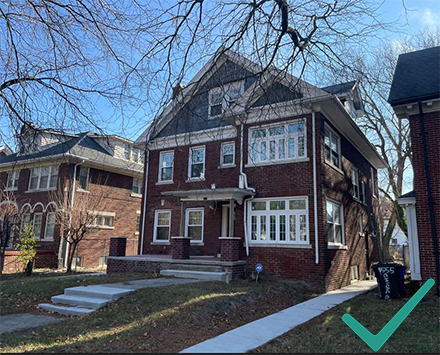
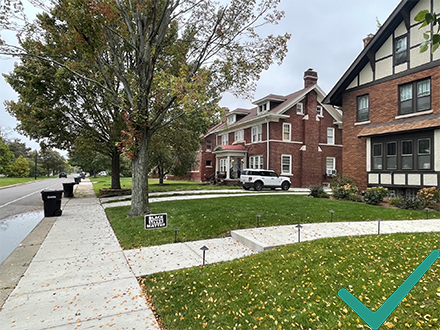
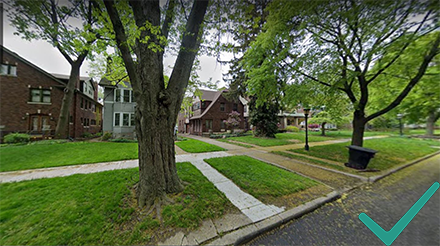
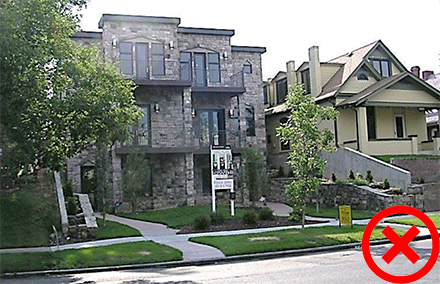
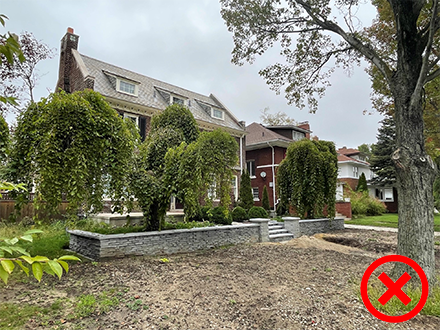
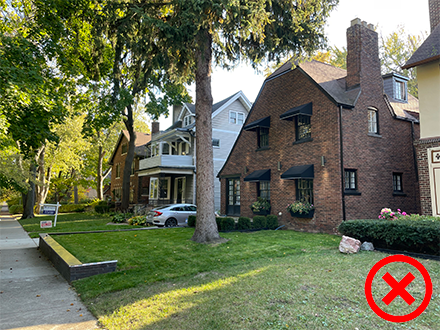
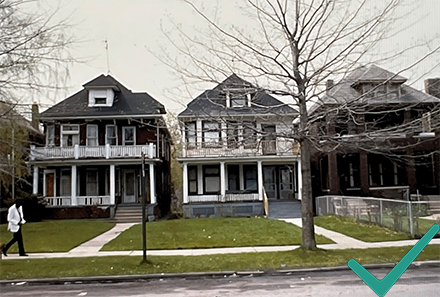
The shape of the ground plane and its height or depth is a character-defining feature of the landscape. Grading may occur naturally or because of human manipulation. For example, grading may contribute to the creation of outdoor spaces, serve a functional purpose, or provide visual interest. Graded features, such as sloped front lawns, raised lots, and other distinctive site design elements, help define the unique character of each district and of individual streets or blocks within each district. Altering these features, such as through the installation of a retaining wall, interrupts the visual continuity of the historic streetscape and detracts from the character of the district.
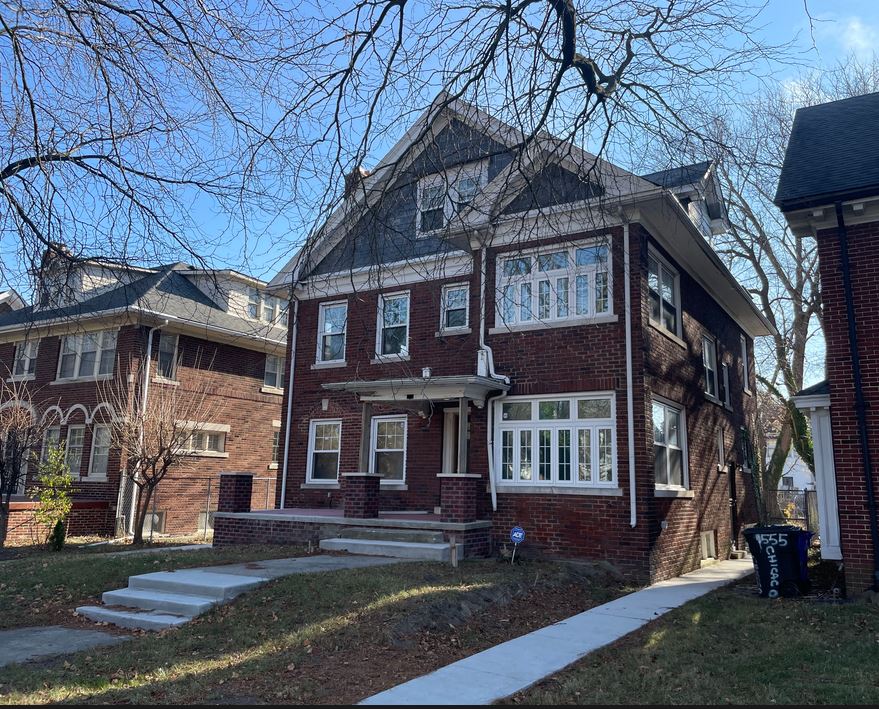
Grading Guidelines
- Historic Grading - Avoid significantly altering the elevation of a property (i.e., extensive grading). Do not alter character-defining features such as berms or sloped front lawns that help define the character of the public right-of-way. Maintain the established lawn to help prevent erosion. If turf is replaced, new plant materials in these areas should be low-growing and suitable for the prevention of erosion.
- New Construction - Match the historic grade of adjacent lots prevalent along the block face for new construction. Do not excavate raised lots to accommodate additional building height or an additional story for new construction.
- New Elements - Minimize changes in grade resulting from new elements, like driveways and walkways, through appropriate siting and design. New site elements should work with, rather than change, character-defining grades when possible.
Correct
Incorrect
Vegetation
Vegetation features may be individual plants, as in the case of a specimen tree, or groups of plants such as street trees along the public berm, foundation plantings or gardens. (For hedgerows, please see the section on Fence, Walls and Hedgerows.) Vegetation includes evergreen or deciduous trees, shrubs, lawns, ground covers, and both woody and herbaceous plants. Vegetation may derive its historic significance from historic cultural associations, horticultural value, aesthetic, or functional qualities. It is a dynamic component of the landscape’s character; therefore, the treatment of cultural landscapes must recognize the continual process of growth, seasonal change, and death of plants. The character of individual plants is derived from habit, form, color, texture, bloom, fruit, fragrance, scale, and context. The Commission’s guidelines for this section are divided into lawns/plantings and trees.
Lawns and Plantings
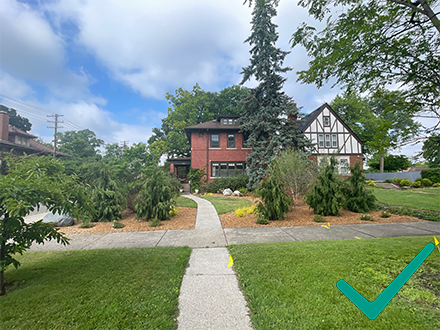
Historic landscapes provide clues to the past and aid in the overall interpretation of our historic districts. Lawns and plantings historically establish a pattern language in the landscape. In many historic districts they are articulated with a front and rear backyard with open lawns and foundation plantings and may also include a streetscape berm, where typically street trees are planted. While some historic districts feature sweeping lawns and formal elements, many other districts feature a divers palette of landscape features including native plantings. Water conservation strategies should be implemented in a manner that responds to the historic context while meeting present day conservation needs.
Lawn and Plantings Feature Guidelines:
- Historic Gardens - Maintain front yard gardens when appropriate within a specific historic district.
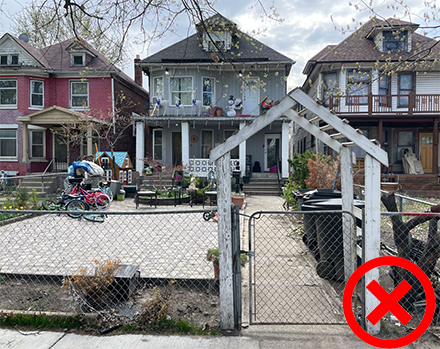
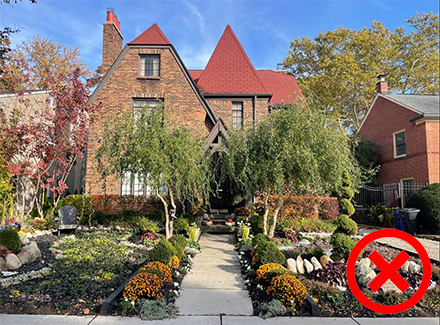
- Historic Lawns - Do not fully remove and replace traditional lawn areas with impervious hardscape. Limit the removal of lawn areas to mulched planting beds or pervious hardscapes in locations where they would historically be found, such as along fences, walkways, or drives. Low-growing plantings should be used in historic lawn areas; invasive or large-scale species should be avoided. Historic lawn areas should not be reduced by more than 50%.
- Native Plants - Select native plants that thrive in local conditions and reduce watering usage. See the City of Detroit’s Recommended Plant List for a list of appropriate materials and planting methods. Select plant materials with a similar character, growth habit, and light requirements as those being replaced.
- Plant Palettes - If a varied plant palette is used, incorporate species of taller heights, such informal elements should be restrained to small areas of the front yard or to the rear or side yard so as not to obstruct views of or otherwise distract from the historic structure. Species selection and planting procedure should be done in accordance with the guidance from the City’s forestry department and their “do not plant list” and “recommended plant list”. For historic gardens, select shrubs or plants that are similar to those that need replacement.
- Maintenance - Maintain existing landscape features. Do not introduce landscape elements that will obscure the historic structure or are located as to retain moisture on walls or foundations (e.g., dense foundation plantings or vines) or as to cause damage.
- Hedgerows - See Fences, Walls, and Hedgerows section
- Mulch and Gravel - Do not use rock mulch or gravel as a wholesale replacement for lawn area. If used, plantings should be incorporated into the design. Mulch should not be used as a wholesale replacement for plant material. Mulch with appropriate plantings should be incorporated in areas where appropriate such as within a planting bed.
Correct
Incorrect
Trees
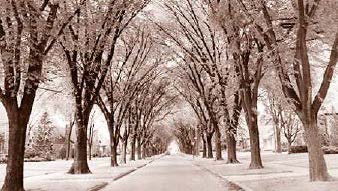
In the early 1900s-1950’s, Detroit’s prolific tree canopy dominated by the American elm tree gave the city its moniker the “Paris of the Midwest”. In the 1960-80s, Dutch elm disease decimated this canopy and the City primarily replaced these trees with silver maple, Norway maple and ash trees for their rapid growth characteristics. When the Emerald Ash Borer arrived in 1999-2000, another wave of tree canopy destruction hit Detroit’s historic tree canopy. Coupled with lack of budget for tree maintenance, weed-tree species control and past planting practices, Detroit’s canopy was reduced to 24% coverage. Preserving and maintaining quality heritage trees, planting a diversity of resilient trees to restore the historic canopy is a strategy to restore Detroit's historic landscape.
Tree Guidelines
- Preservation - Preserve and protect from damage existing mature trees and heritage trees. Historic-aged trees are considered those that are 8” or more DBH (diameter at breast height or 4.5 ft above grade) and not considered a “nuisance” tree, a danger to a historic element or is itself an invasive species. A certified arborist can establish the species and health of the tree, as well as recommend any treatment to preserve the tree.
- New Trees - Select new trees based on site conditions. Avoid planting new trees in locations that could potentially cause damage to a historic structure or other historic elements. For historic landscapes, select trees that are similar to those that are in need of replacement. Species selection and planting procedure should be done in accordance with the guidance from the City’s forestry department and their “do not plant list” and “recommended plant list”.
- Maintenance - Proper pruning encourages healthy growth and can extend the lifespan of trees. Avoid unnecessary or harmful pruning, such as “sky to ground” pruning practices. Avoid timing of pruning that can cause disease or harm to other species. A certified, licensed arborist is recommended for the pruning of mature trees and heritage trees.
HDC Staff Review Authority - More Information
Administrative/General
Review and approve final construction documents or submissions associated with any Certificates of Appropriateness or Notices-to-Proceed issued by the Commission.
In-kind* repair, contingent upon staff determination that such repair work is consistent with the Secretary of the Interior’s Standards for Rehabilitation; and, in-kind replacement, contingent upon staff determination that such replacement work is consistent with the Secretary of the Interior’s Standards for Rehabilitation; and specifically that the level of deterioration of any individual feature, element or assembly proposed for replacement is severe enough to be beyond reasonable repair per Standard 6.
*“In-kind” is defined as faithfully reproducing original, historic, or documented character-defining features, elements, and assemblies with respect to design, color, finish, texture, craftsmanship, materials, relationship to other elements or spaces, and other visual qualities.
Removal of incompatible, non-historic, or historically inappropriate siding, finishes, or elements on any part of a resource, including but not limited to types of asphalt siding meant to convey an artificial “brick” appearance; e.g., “Insul-Brick”.
Removal and replacement of incompatible, non-historic, or historically inappropriate elements, including windows, doors, and storefront systems, on any part of a resource, with historically appropriate replacements.
Other work affecting only non-primary elevations/roof areas* not otherwise subject to public hearing under Section 21-2-77.
Non-contributing resource: All work (not otherwise subject to public hearing-additions, demolition, new construction) is approvable by its staff under the condition that it is compatible with the massing, size, scale and architectural features to protect the historic integrity of the district and its environment.
The Commission defines the term primary elevation to mean any street or public-facing elevation or roof area of a building (including side elevations along streets, but not alleys) and any additional elevation hosting the principal entrance to a building, if not already facing a street; and specifically excludes the sides of a building from being considered a primary elevation due only to increased visibility caused by any condition, current or proposed, on an adjacent parcel not under the same ownership.
*The Director (or their Deputy) shall continue to have the ability to refuse administrative approval and refer any administratively approvable scope to the Commission for disposition, regardless of staff authority pertaining to the proposed work.
Site Improvements
ADA/Accessiblity
The issuance of a Notice-to-Proceed for lifts, ramps, and other associated elements proposed for ADA accessibility located on any elevation, including the primary elevation, of single-family and duplex residential buildings with nominal impact to existing, character-defining historic fabric and designed to be reversible and removable from the property after their use is no longer necessary.
Installation of ADA ramp, on the condition that:
the ramp is installed in an area with limited-to-no visibility to the public right-of-way,
the design is sympathetic to the architectural style of the house and uses compatible materials (if the ramp and railing are constructed of wood, they shall be painted in a color corresponding with the house’s color system), and
the ramp conforms to the National Park Service Preservation Brief #32: Making Historic Properties Accessible.
Decks/Patios/Structures (no foundations)/Swimming Pools
Erection of small garden/storage sheds or greenhouses not exceeding 120SF in footprint not otherwise requiring excavation or a building permit.
Installation of swing-sets, swimming pools, and play-structures erected in backyards not otherwise requiring a building permit.
Erection of rear decks, patios, garden structures, benches, hot tubs/spas, and outdoor kitchens not substantially visible from the street.
Birdhouses, book stations, mailboxes, and other similar minor items in the landscape.
Dumpster
Installation of a new dumpster enclosure under the condition that the location, dimension, and materials conform to the Detroit City Code/Zoning Ordinance and is installed with footings similar to a fence. Enclosures erected with foundations must be reviewed by the HDC and are subject to public hearing.
Fence/Hedge
Replacement of an existing fence provided the type, materials, and height match the existing fence, OR meets the Historic District Commission’s Fence and Hedge Guidelines.
Erection of a fence and/or hedges at a new location provided the type, materials, and height conform to the Fence and Hedge Guidelines.
Erection of new fences no taller than 7 feet in height, if no historic fence is present;
Hardscape/Flagpole
A change in walkway or driveway material that matches the same width and length and meets the districts’ Elements of Design.
Installation of concrete hardscape under the condition that it is not “bright white.” Specifically, such concrete must be composed of an exposed aggregate, tinted grey, or finished with a clear or tinted grey curing compound.
Installation of walkways, driveways, and concrete hardscape not in the public right-of-way.
Erection of new painted steel flagpole(s), not exceeding two-stories in height where no flagpole is already present.
HVAC
Installation of air condensing units and other general mechanical units, on the condition that:
The unit(s) will be placed behind the building, OR
The unit(s) will be placed on the side of the building (only if a rear location is not possible), and will be fully and continually screened by vegetation or a constructed screen wall, AND
The location and screening comply with the requirements as set forth in the city’s zoning ordinance.
Landscaping/Retaining Walls/Trees
Landscaping, including minor planter/retaining walls less than 18” high, excepting the removal of healthy trees over 6” DBH;
Installation of new landscaping, so long as it meets the district’s Elements of Design and does not result in the removal of existing character-defining elements/landscape features
Removal of dead, diseased or damaged trees with a written statement from a professional service or arborist.
Removal of landscaping that is located in close vicinity to an historic building to the extent that it is damaging/has the potential to damage the historic building.
Outdoor Cafes/Street Furnishings
Renewal of seasonal outdoor café plans with the condition that the future application does not change from a plan that the Detroit Historic District Commission approved, and no complaints were received about the seasonal outdoor café plan during the previous season.
A change in street furnishings and/or materials that does not change the location of the barrier and/or barrier style and meets the Detroit Historic District Commission’s Color Guide.
Outdoor sidewalk cafes, on the condition that:
the outdoor café equipment can be removed from the public right-of-way during the months of December – March,
no off-premises advertising signs shall be installed within the outdoor café area,
all items associated with the canopies/awnings shall meet the structural conditions as required by the Detroit Building, Safety, Engineering & Environmental Department,
all work proposed for installation in the public right-of-way be approved by the Detroit Department of Public Works, City Engineering Division, and
the applicant shall insure the Detroit City Council approve the proposed sidewalk outdoor eating/café area prior to its installation.
Utilities/Infrastructure
The installation of DTE equipment for underground residential service, provided that
all items associated with the equipment shall meet the structural conditions as required by the Detroit Building, Safety, Engineering, and Environmental Department, and
all work proposed for installation in the public right-of-way be approved by the Detroit Department of Public Works, City Engineering Division.
Installation of new exterior gas meters, new underground gas main lines, and new underground gas service lines, provided that the procedure used to install the new equipment occurs under the following conditions:
DTE Gas Company shall ask the property owner for a preferred location for exterior meters that is consistent with this resolution and shall install exterior meters in such location unless technically infeasible, hazardous, or prohibited by law. Nothing in this resolution shall be construed as compelling exterior relocations of gas meters except as required by law.
An exterior meter shall be installed on a side (i.e., perpendicular to the main façade) or back elevation of the building if the building is not sited on a corner lot or along a public alley.
If installing the meter at a building sited on a corner lot or along a public alley, then locate the equipment at the side elevation (perpendicular to the main façade) opposite to the right-of-way.
Utilize directional drilling for gas line installation where feasible to minimize ground disturbance; and
Where disturbance to elements within districts (including sidewalks, streets, shrubs, trees, lawn, curbing, etc.) results from the proposed work, then restore the affected area to its pre-construction condition. Historic built/architectural elements disrupted by the work shall be retained, securely stored and properly reinstalled; reproductions shall not be permitted. Any trees, shrubs, perennials, groundcovers, or similar permanent plantings (to include underground bulbs, rhizomes, etc.) shall be preserved and protected in situ to the extent feasible. DTE Gas Company shall request that the property owner identify such plantings prior to commencement of the work.
Tree trimming and tree removal work in support of electrical infrastructure improvements, under the following conditions:
Trees may be trimmed to a maximum 15’ radius from poles, equipment, and conductors (i.e., overhead wires) as recommended by DTE and/or its contractors.
Should a property owner agree in writing, trees on private property at or near the alley recommended by DTE for removal are hereby approved, under the following conditions:
An appropriate replacement tree at a different location on the property be offered to the property owner, subject to Commission staff approval
For street trees, defined here as trees in the public right-of-way between the street and the public sidewalk, DTE and/or its contractors may remove trees only upon satisfaction of the following conditions:
The City of Detroit’s arborist or forester has specifically approved the removal of the subject tree, and;
A new tree of an appropriate type be planted elsewhere within the boundaries of the historic district, in consultation with and as approved by both the city forester and Commission staff, as close to the removed tree as feasible without reproducing the original conflict, and;
DTE and/or its contractors shall be responsible for submitting information about each such street tree removal to Commission staff no later than one week prior to removal, to allow Commission staff to plan for responses to any community inquiries surrounding the activity and review the proposed location of the replacement tree.
A planting plan and planting schedule may be submitted to Commission staff and the city’s arborist/forester that bundles replacement plantings across historic districts over a single planting season (i.e., fall or spring) rather than individual planting plans.
Infrastructure improvements to include new exterior gas meters, new underground gas main lines, and new underground gas service lines under the following conditions:
An exterior meter shall be installed on a side or rear elevation of the building if the building is not sited on a corner lot or along a public alley.
If installing the meter at a building sited on a corner lot or along a public alley, then DTE shall locate the equipment at the side elevation opposite to the public right-of-way.
If a property owner so chooses, an exterior meter may be painted at the property owner’s expense and discretion to blend in or otherwise match the surroundings.
DTE shall ask the property owner for a preferred location for exterior meters that is consistent with this resolution and shall install exterior meters in such location unless technically infeasible, hazardous, or prohibited by law. Nothing in this resolution shall be construed as compelling exterior relocations of gas meters except as required by law.
Utilize directional drilling for gas line installation where feasible to minimize ground disturbance; and
Where disturbance to elements within districts (including sidewalks, streets, shrubs, trees, lawns, curbing, etc.) results from the proposed work, then restore the affected area to its pre-construction condition. Historic built/architectural elements disrupted by the work shall be retained, securely stored and properly reinstalled; reproductions shall not be permitted. Any trees, shrubs, perennials, groundcovers or similar permanent plantings (to include underground bulbs, rhizomes, etc.) shall be preserved and protected in situ to the extent feasible. DTE shall request that the property owner identify such plantings prior to commencement of the work. At vacant/abandoned properties, Commission staff will consult. Any such designated plants heavily damaged or destroyed by the work (either directly or within one calendar year due to excessive disturbance or transplantation) shall be replaced by DTE Gas Company with reasonably similar species/cultivars of similar size, type, quantity and quality, and installed by DTE's landscape contractors. Such replantings shall be warranted by DTE or its subcontractor for one (1) additional calendar year.
Gas lamps that are directly connected to the gas main will be disconnected during the gas main renewal process. The Commission recognizes that new gas mains will be serving residents at an elevated pressure that prohibits operation of these lamps as they stand today. Due to safety concerns (Michigan Gas Safety Code 192.353) DTE will no longer be supporting direct-fed lamps. Residents paying the monthly gas lamp fee will have their gas lamp account discontinued as of the gas cut date. Commission staff is authorized to approve alternate modes of illumination that have minimal impact on the historic environment.
City Council President
Off
City Council Pro Tem
Off