
Mayor Sheffield announces historic $9.2M investment to help families exit and stay out of homelessness
- “Homeless to Housed” initiative provides rental assistance along with case management to help families stabilize, strengthen and prepare for self-sufficiency
- Investment represents a 500% increase over previous years and will assist up to 140 families, representing 500 individuals annually
- Initiative prioritizes families with minor children
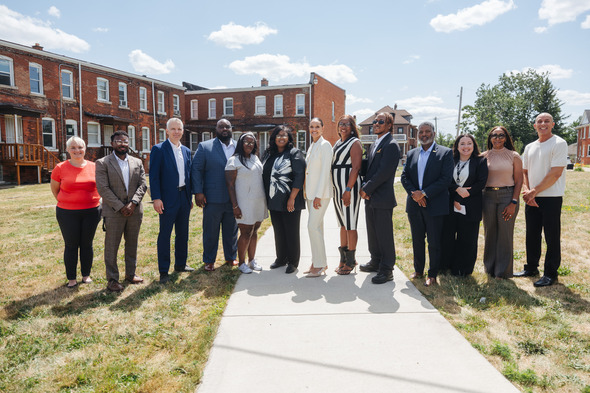
Mayor Mary Sheffield today announced an historic investment in helping to transition unsheltered Detroit families and individuals into their own homes, bringing them stability and independence. The Homeless to Housed initiative is a $9.2 million effort being made over three years to help families experiencing homelessness move from emergency shelter into stable housing.
This investment represents more than a 500% increase in annual spending on such programs from the prior year and will allow the city to help approximately 140 households representing 500 Detroiters annually.
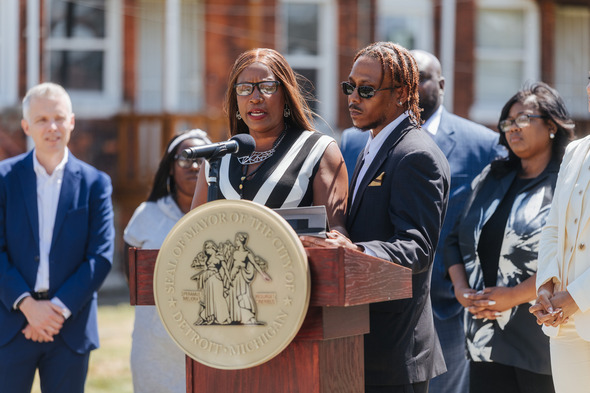
"Every family deserves a safe, stable place to call home," said Mayor Mary Sheffield. "My administration’s new Homeless to Housed initiative represents one of the most significant investments our city has made to help families move beyond emergency shelter and toward lasting housing stability. By pairing rental assistance with intensive case management, we are helping families – particularly those with minor children - stabilize, strengthen and eventually become fully self-sufficient."
Detroit's emergency shelter system has been operating at or near full capacity for more than a year. Following policy discussions with City staff, shelter providers, and residents experiencing homelessness, Mayor Sheffield identified a top priority for the system: create more opportunities for families to successfully transition from shelter into permanent housing.
The result was the creation of the Homeless to Housed initiative, which combines two evidence-based housing programs:
- Rapid Rehousing (RRH), supported through City general funds and Emergency Solutions Grant (ESG) funding. RRH provides short-to-medium term rental assistance, security deposits, and case management to help Detroit families exit shelter, enter safe and stable housing quicker, and remain housed. The additional RRH funding is estimated to impact 78 households (296 individuals) by the end of 2026 and continue serving 78 households every 6-12 months through June 2028.
- Tenant-Based Rental Assistance (TBRA), supported through HOME-ARP funding, provides tenants with case management and rental assistance to make private market housing options more affordable. This program is estimated to impact 60 households (227 individuals) by the end of 2026.
Together, the two programs provide 6 to 12 months of rental assistance along with intensive housing stability case management to help families successfully transition into and remain in permanent housing.

The City's new Department of Human, Homeless, and Family Services (HHFS) strategically reprogrammed Federal Emergency Solutions Grant funding—based on Mayor Sheffield’s charge and with support of Detroit City Council—to expand these Homeless to Housed programs for Detroit families. The initiative focuses on families with minor children currently residing in Detroit emergency shelters. Families are selected through a standardized assessment process to ensure assistance is directed to those most likely to benefit from the program.
The city has engaged with the Neighborhood Services Organization, in partnership with Community and Home Supports, as well as Wayne Metro Community Action Agency to deliver the services. These agencies will implement the two programs- helping families find units, speak with landlords, and move into their new home. Once housed, each family will have ongoing case management services to help them stabilize and be successful in their housing.
"Rapid rehousing is a great program because it gives families the opportunity to build a future for their families," Malika Betey, a participant of the program said, "I'm extremely grateful to be a part of it."
The Sheffield Administration’s Homeless to Housed Initiative is grounded in research demonstrating that housing assistance helps families leave homelessness more quickly and remain stably housed.
Peer reviewed research published in the Journal of Urban Economics found that families receiving Rapid Rehousing assistance reduced their use of homeless services by 25 percent over four years, and individuals reduced their use by 30 percent, demonstrating the long-term effectiveness of the intervention.
“Mayor Sheffield's Homeless to Housed initiative exemplifies the innovative, results-driven, and person-centered policymaking that our new Department of Human, Homeless, and Family Services was created to deliver.” Dr. Luke Shaefer, PhD, Chief Executive of Health, Human Services, and Poverty Solutions said. “By aligning resources, breaking down silos, and investing in evidence-based solutions, we are advancing the Mayor’s vision of a Detroit where every family has the opportunity not just to overcome crisis, but to achieve long-term stability and thrive.
As a City Council member, the Mayor made homelessness a priority through the establishment of her Homelessness Task Force. As City Council President, she made the first general funds allocation in recent history to support the City’s homelessness budget.” David Bowser, MPH – Chief of Staff, Mayor Mary Sheffield said. “And now as Mayor, she has made a groundbreaking investment in fundamentally changing how our shelter system works on behalf of our residents, and that means now focusing on ending homelessness with supports that have proven success in doing so. We are extremely excited to see the impact on vulnerable Detroiters and their families of this investment, and even more excited to see our city Rise Higher as a result. “
Research from HUD on tenant-based rental assistance found that families receiving assistance experienced fewer moves, improved neighborhood quality, reduced homelessness, and greater rates of independent housing.
The U.S. Department of Housing and Urban Development (HUD) has found that families offered permanent housing vouchers experienced less than half as many episodes of subsequent homelessness compared with families receiving standard services. HUD also found that families receiving housing assistance experienced greater food security and less economic stress than those who did not.
The Homeless to Housed initiative reflects Mayor Sheffield's commitment to expand access to stable housing while improving the effectiveness of Detroit's homeless response system. By increasing opportunities for families to exit emergency shelter, the initiative will create additional shelter capacity for households experiencing housing crises while helping more Detroit children grow up in safe, stable homes.
“The Sheffield administration continues to demonstrate, not just in word, but through investment in homeless programming, that it is committed to ending homelessness.” Tasha Gray, Executive Director, Homeless Action Network of Detroit said. “It is refreshing to have a mayor who consistently shows up for people who are experiencing homelessness. From her early days in the city council to now, Mayor Sheffield has been bringing the public muscle to the issue.”
“Neighborhood Service Organization (NSO) believes that every child deserves the opportunity to grow up in a safe, stable home, and every family deserves the support needed to overcome barriers to permanent housing.” Linda Little, CEO of the Neighborhood Services Organization said. “We are grateful for the opportunity to partner with the City of Detroit in creating stronger families, healthier communities, and a future where every child has a safe place to call home.”
“These programs make a complex system more navigable and result in more people obtaining permanent housing. We interact directly with the people in shelters and on the streets to help them find homes.” John Stoyka, President & Executive Director of Community & Home Supports Inc. said. “After we walk them through every step, we are able to offer assistance with security deposits, rent, and utilities. They don’t have to do it on their own. The result is more people with housing and opportunity.”
“Every day, Wayne Metro responds to residents and families facing housing crises, and we see firsthand the life-changing impact of stable housing.” Louis Piszker, CEO of the Wayne Metropolitan Community Action Agency said. “As the subcontractor for the HOME ARP Tenant-Based Rental Assistance (TBRA) program, we are proud to partner with the City of Detroit, NSO, and CHS to help move individuals and families from homelessness to housing. The City's expansion of access to these critical services is a significant step forward, and we are honored to play a role in helping more Detroit residents find stability, hope, and a place to call home.
About Neighborhood Service Organization
Neighborhood Service Organization (NSO), a Detroit-based integrated health and human service agency, delivers community-based services and holistic programs for vulnerable populations. The agency provides behavioral health and primary care services, in addition to wraparound services that address barriers to housing, health and well-being with multiple locations throughout Detroit and surrounding committees.
About Wayne Metropolitan Community Action Agency
Wayne Metropolitan Community Action Agency (Wayne Metro) is a non-profit organization serving approximately 75,000 low- and moderate-income residents throughout Wayne County. They operate more than 100 programs in the area of Quality Housing, Family Stability, and Economic Opportunities.
About Community Home Supports
Community & Home Supports, Inc. was founded in 2008 to help people and communities address poverty and homelessness. Guided by core values of integrity, empathy, competence, community, advocacy, and equity, the non-profit develops leads, and participates in collaborative and innovative efforts that support those experiencing homelessness as well as advocating for fair, affordable, and equitable housing.