
BeBot returns to the shores of Belle Isle for third year to help fight plastic pollution
- The BeBot is a collaboration between Meijer, City of Detroit, the Belle Isle Conservancy, the Michigan Department of Natural Resources, and the Great Lakes Plastic Cleanup a binational initiative of the CGLR Foundation and Pollution Probe in Canada.
- BeBot has the ability cover 32,000 square feet per hour via battery power and remote control removing various sizes of debris from the shores of Belle Isle.
- The data collected will be used to help with the cleaning and preservation of Michigan’s natural resources such as the Detroit River and Belle Isle.
The beach cleaning robot “BeBot” (pronounced as bee-bot) returned to the shores of Belle Isle for the third year in a row in the fight against plastic pollution. BeBot was first introduced in 2024 as a part of the Keep Belle Isle Beautiful campaign by the Belle Isle Conservancy.
The BeBot, who has been affectionately named Betty, is just one of the parts of every growing incentive by the partnership of Great Lakes Plastic Cleanup, a collaborative effort between the CGLR Foundation in the U.S. and Pollution Probe in Canada, targeting enhanced plastic litter removal and reduction on Belle Isle Beach. In partnership with the Belle Isle Conservancy, the State of Michigan's Department of Natural Resources (MDNR), and the CGLR Foundation, to help keep Michigan’s natural environment clean and preserve it for future generations.
“Betty the BeBot” has ability to cover 32,000 square feet per hour, while being completely electric and remote controlled. The robot is designed to go across the beach and pick up trash and debris including bottles, food wrappers, cigarette butts, and fragmented plastic particles of different sizes. These clean ups will help with further research on how to preserve the environment in eco-friendly manner.
For this year, Meijer made a $280,000 donation to CGLR to keep BeBots and Pixie Drones operating around the Great Lakes, including at Belle Isle in Detroit.
“We’re excited to welcome BeBot back to Belle Isle for a third year and continue leveraging innovative technology to help protect one of Detroit’s most treasured public spaces. This partnership demonstrates how mobility innovation can extend beyond transportation to support environmental stewardship, while providing valuable data that helps us better understand and address plastic pollution along our waterways and shorelines,” said Konnor Petz, Head of Special Projects, City of Detroit Office of Mobility Innovation.
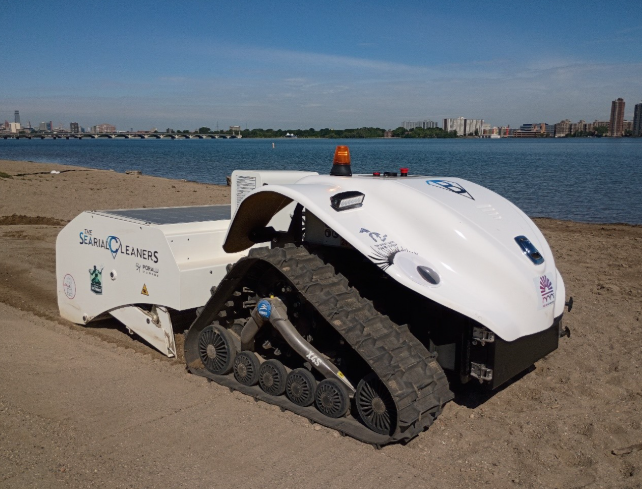
“Betty the BeBot” returns for a third year at Belle Isle Beach in Summer 2026.
It is one of the newest pieces of litter remover technology that is the result of the collaboration of City of Detroit’s Office of Mobility Innovation and the CGLR Foundation, and with the $280,000 donation from Meijer as well. Michigan’s Department of Natural Resources will continue to support the BeBot as it helps clean and preserve Belle Isle’s beach for the residents and citizens in the City of Detroit.
"Protecting the Great Lakes requires collaboration that crosses sectors, borders, and communities. The return of BeBot to Belle Isle for a third consecutive year demonstrates what is possible when private industry, government, nonprofits, and local partners work together toward a common goal. Detroit continues to show leadership as a city that embraces innovation to protect one of the world's most valuable freshwater resources, and we're proud to help advance solutions that strengthen the environmental and economic future of the entire Great Lakes region,” said Vance Badawey, President and CEO, CGLR.
The Belle Isle Conservatory will again be controlling during public cleanups, in which residents and visitors are allowed to attend, and will use data to provide research into waste characterization. The project was generously funded and supported by The Clorox Company to CGLR Foundation.
Belle Isle Conservancy President and CEO, Meagan Elliott said, “The Belle Isle Conservancy is so proud to have this partnership with both the City of Detroit and the State of Michigan Department of Natural Resources. Often conversations about technology tend to be in different rooms from those talking about nature conservation and stewardship. But BeBot has been an amazing educational tool to show ways that technological advancement can be directed to positively impact our environment.”
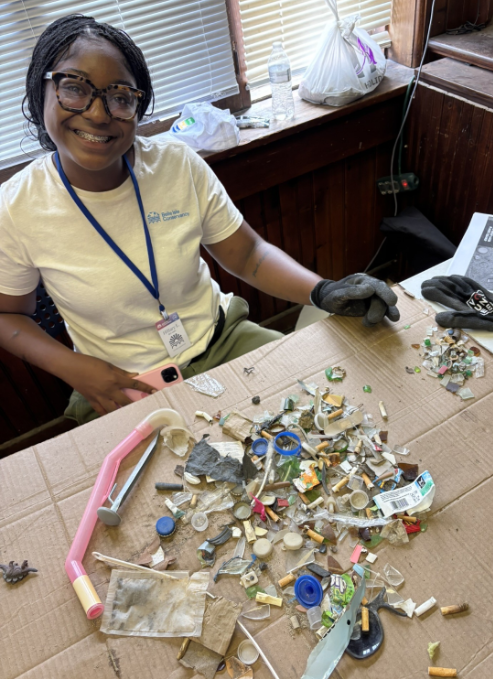
A volunteer sorts debris collected by "Betty" the BeBot during a shoreline cleanup. While the robot can clean approximately 100–150 yards of shoreline in about 20 minutes, volunteers spend nearly an hour sorting small debris and microplastics from larger litter for analysis and proper disposal.
“At Meijer, we understand how important the Great Lakes are to the communities we serve, and we’re proud to continue supporting innovative solutions that help protect these vital waterways,” said Erik Petrovskis, Director of Environmental Compliance and Sustainability at Meijer. “Bringing Betty the BeBot back to Belle Isle for a third year reflects the power of partnership and community action to reduce plastic pollution, preserve our shorelines and inspire future generations to care for the natural resources that make our region so special.”
To learn more about BeBot’s deployment on the shores of Bele Isle, its impact on the environment, and any other information please visit: belleisleconservancy.org/cleanup for more details.
BIC is looking for volunteers who want to help with cleaning the shores and water of Belle Isle alongside Betty as well. The cleanup dates will be every second Friday of the month from July to September from 9:30am to 11:30am at Belle Isle Beach. Also, every third Saturday from now to October 17th from 9:30am to 11:30am and Wednesdays from 9:30am to 11:30am on Belle Isle Beach as well.
For more information on the cleanups and volunteering visit: belleisleconservancy.org/support for more details.
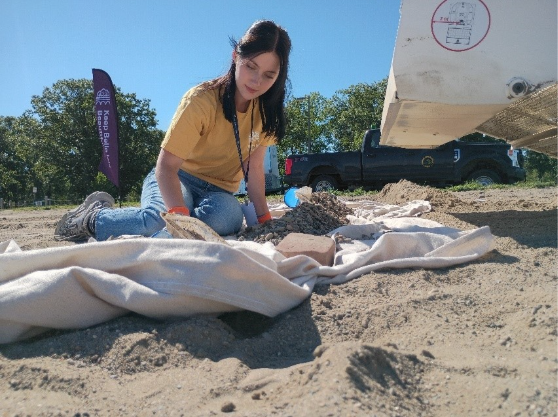
A volunteer sorts debris collected by "Betty" the BeBot during a shoreline cleanup. While the robot can clean approximately 100–150 yards of shoreline in about 20 minutes, volunteers spend nearly an hour sorting small debris and microplastics from larger litter for analysis and proper disposal.
About the City of Detroit's Office of Mobility Innovation (OMI):
The Office of Mobility Innovation (OMI) exists to help the City of Detroit navigate the rapidly changing transportation and mobility industries. Transportation and mobility are essential for both people and businesses and Detroit’s automotive heritage provides an unparalleled opportunity to work with industry to innovate and define their future.
OMI leads mobility advancement efforts on behalf of the City of Detroit and collaborate with industry, academia, philanthropy, and local, state and federal government. By centering residents in every step of the process, OMI is focused on leveraging mobility as a pathway to opportunity in Detroit.
For additional information about OMI, please visit detroitmi.gov/government/mayors-office/office-mobility-innovation or follow us on LinkedIn and Instagram.
About Belle Isle Conservancy
Belle Isle Conservancy's mission is to protect, preserve, restore, and enhance the natural environment, historic structures, and unique character of Belle Isle as a public park for the enjoyment of all – now and forever. As a result of merging four groups dedicated to supporting the park, Belle Isle Conservancy works in close partnership with the Michigan Department of Natural Resources and the City of Detroit to bring additional resources to supporting and sustaining the park. Visit belleisleconservancy.org to learn more.
About Council of the Great Lakes Region (CGLR)
Council of the Great Lakes Region (CGLR), comprised of CGLR Canada, the CGLR Canada Foundation, CGLR USA, and the CGLR Foundation, is a network of charitable and non-charitable organizations in the transnational Great Lakes – St. Lawrence region focused on accelerating the transition to a sustainable future by uniquely bringing diverse perspectives and interests together to explore and solve our most pressing socioeconomic and environmental challenges. Through cross-border collaboration and innovative partnerships, CGLR strives to create the first sustainable region in the world. For additional information, please visit councilgreatlakesregion.org.
About the Great Lakes Plastic Cleanup
The Great Lakes Plastic Cleanup, an initiative of the CGLR and Pollution Probe, uses innovative technologies to quickly remove plastics from Great Lakes beaches and waterways, from the St. Lawrence River to Lake Superior and everywhere in between. The litter collected is analyzed, providing vital information about pollution sources and pathways and how government, industry, communities, and consumers can work together to end plastic waste. The largest initiative of its kind in North America, the Great Lakes Plastic Cleanup is made possible thanks to support from a network of funders and collaborators across the binational Great Lakes region. Visit greatlakesplasticcleanup.org to learn more.
About Meijer:
Meijer is a privately owned, family-operated retailer that serves customers at more than 500 supercenters, grocery stores, neighborhood markets, and express locations throughout the Midwest. As the pioneer of the one-stop shopping concept, more than 70,000 Meijer team members work hard to deliver a friendly, seamless in-store and online shopping experience featuring an assortment of fresh foods, high-quality apparel, household essentials, and health and wellness products and services. Meijer is consistently recognized as a Great Place to Work and annually donates at least 6 percent of its profit to strengthen its communities. Additional information on the company can be found by visiting newsroom.meijer.com.