
Mental Health Co-Response
News & Events
Related Links
Videos
Documents
Forms
FAQs
District Map
Office Directory
Contacts
Contacts
FAQs
Sections
Web Apps
News
Events
FAQs
Statements
Newsletters
FAQs
Resolutions
Memos
Program Background
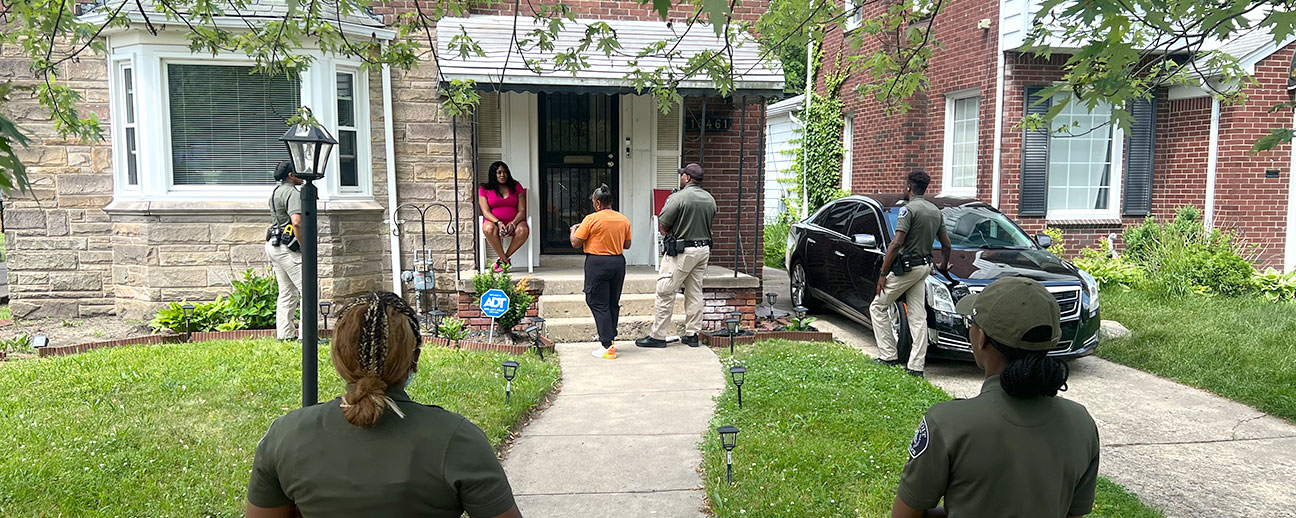
The Mental Health Co-Response (MHCR) Partnership was launched in 2020 as a collaboration between the Detroit Police Department (DPD), Detroit Wayne Integrated Health Network (DWIHN), Detroit Fire Department (DFD/EMS), and the Housing and Revitalization Department (HRD). The initiative integrates behavioral health professionals, 911 communications, crisis response teams, and street outreach teams to provide coordinated care and support for individuals experiencing behavioral health crises.
The Need and Goals
There is an ongoing behavioral health crisis at the intersection of behavioral health, homelessness, and emergency response, compounded by chronic challenges such as serious mental illness (SMI), substance use disorders (SUD), and other co-occurring conditions.
The Mental Health Co-Response Program was created to help bridge these gaps by working to:
- De-escalate behavioral health crises on-site
- Improve access to timely and appropriate mental health care
- Interrupt cycles of repeated emergency room visits, justice system involvement, and short-term hospital stays for individuals with complex needs
- Reduce reliance on law enforcement and emergency medical services for behavioral health crises
- Connect individuals to long-term, community-based support systems
- Strengthen the network of available services and encourage collaboration between providers and partners
Partners
Key partners include the Detroit Police Department (DPD); City of Detroit Mayor's Office; Department of Human, Homeless, and Family Services (HHFS); Detroit Fire Department (DFD/EMS); and Detroit Wayne Integrated Health Network (DWIHN).


In Your Neighborhood
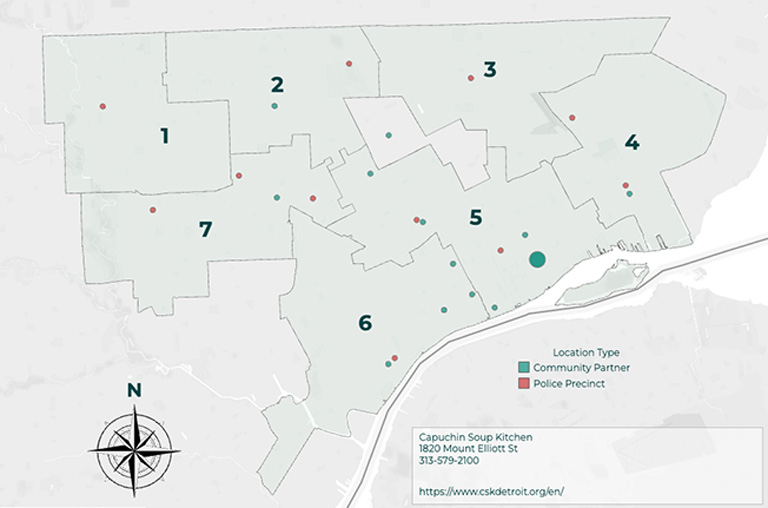
The MHCR Team responds to behavioral health crises across Detroit, helping connect residents to care and support. The interactive map pictured is organized by City Council district and shows where MHCR teams have been active in police precincts and community partner locations across the city. You can use the map to explore what’s happening in each area and see where services are being delivered.
Current Services and Supports
Staff & Specialized Roles
Behavioral Health Specialists
Six Behavioral Health Specialists are embedded in police precincts, working in pairs with CIT-trained officers. They provide de-escalation support, build case files, and help connect individuals to care. Behavioral Health Specialist coverage is available 24/7, ensuring around-the-clock behavioral health support.
911 Mental Health Communication Coordinators
Mental Health Communication Coordinators provide 24/7 support the 911 Call Center. They triage mental health-related calls and coordinate follow-up services.
Case Management
Three Case Managers are embedded across the 911 Center, DPD precincts, and DHOT. They work across systems to support behavioral health continuity, housing referrals, and coordinated care planning.
Programs & Teams
Detroit Homeless Outreach Team (DHOT)
The Detroit Homeless Outreach Team (DHOT) includes dedicated outreach workers who engage individuals experiencing unsheltered homelessness in areas not meant for human habitation. They build rapport, provide on-the-ground support, and connect individuals to available shelter options, basic-needs services, and housing navigation.
24/7 Street Outreach
Street Outreach services operate 24/7 to provide consistent engagement and support to individuals and families in unsheltered settings across Detroit. Outreach workers respond to calls, conduct welfare checks, and connect people to housing, shelter, and behavioral health services. This work is carried out in partnership with Wayne Metropolitan Community Action Agency.
Street Medicine
The Street Medicine team delivers mobile, trauma-informed healthcare directly to individuals living in encampments or on the streets. Services include primary healthcare services, such as wound care and prescriptions, and behavioral health screenings. This program operates in partnership with Community Health and Social Services Center (CHASS).
Shelter Expansion
To meet the growing need for safe and accessible emergency shelter, MHCR partners, including Cass Community Social Services (CASS), Coalition on Temporary Shelter (COTS), and Detroit Rescue Mission Ministries (DRMM), have worked to expand temporary shelter capacity across the city. These efforts have included adding more beds, increasing staffing, and enhancing critical services such as transportation support for Detroit’s residents in need.
Drop-in Center
A low-barrier drop-in center has been established to provide a safe, welcoming access point for individuals experiencing a crisis. The center offers immediate access to basic needs, peer support, and behavioral health referrals. Access to the drop-in center is available to anyone with a referral from an outreach provider, the Detroit Police Department (DPD), or a participating emergency department.
Training
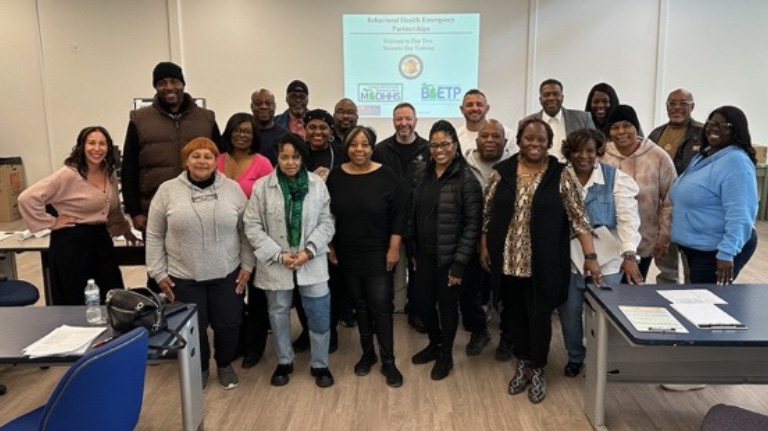
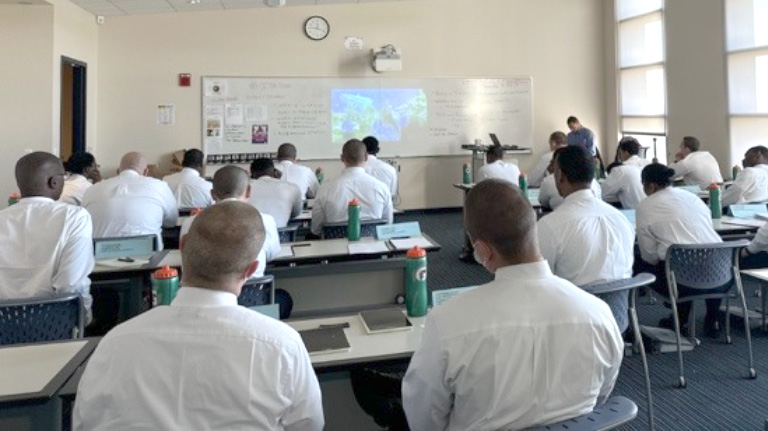
These trainings are funded through ARPA to support the Mental Health Co-Response team. They provide essential skills for our first responders from DPD and DFD who interact directly with the public, enabling them to effectively care for individuals in crisis. To date, 1,921 personnel have completed BHEP training through this program.
Crisis Intervention Team (CIT) Training
40-hour specialized law enforcement curriculum designed to improve interactions between officers and individuals experiencing mental health crises, aiming to de-escalate situations and connect people with needed resources.
Behavioral Health Emergency Partnership (BHEP) Training
20-hour training for first responders and clinicians to recognize and respond to behavioral health crises. It includes online, classroom, and scenario-based instruction, and is approved for 16 continuing education hours.
Mental Health First Aid (MHFA) Training
8-hour evidence-based training that teaches civilians and first responders how to identify, understand, and respond to signs of mental health and substance use challenges, equipping them with skills to provide initial support and connect individuals with appropriate professional help.
City Council President
Off
City Council Pro Tem
Off