Detroit Fire Department urges Home Heating Safety following deadly space heater fire
- Space heaters remain one of the most common causes of heating-related fires and fire deaths
- Deadly fire caused by home heating equipment Sunday claimed the life of a 69-year-old Detroit man
- Carbon monoxide (CO) is another serious hazard during the winter months
- Residents can schedule Community Risk Reduction presentations in their neighborhood
As temperatures fall and furnaces, fireplaces and space heaters come back into use across the city, the Detroit Fire Department (DFD) is urging residents to take simple but crucial steps to prevent home fires and protect their families. The reminder comes following a fatal residential fire yesterday that claimed the life of a 69-year-old man.
The fire involved a space heater that was not plugged directly into a wall outlet, with combustible materials nearby. By the time Detroit firefighters arrived just three minutes after the call came in, the home's second floor was fully engulfed in flames.
The tragedy underscores how quickly improper use of heating equipment and nearby combustible materials can contribute to a deadly fire. DFD is reminding residents that taking a few precautions can make a critical difference as the home heating season gets underway.
Heating equipment is one of the leading causes of home fires and home fire deaths nationwide, according to the National Fire Protection Association (NFPA). Detroit firefighters respond to fires involving heating equipment every year, many of which can be prevented through proper use, maintenance and awareness.
“It's heartbreaking when a fire takes someone's life,” said Executive Fire Commissioner Chuck Simms. “As we head into the colder months, we're asking everyone to take a few minutes to make sure they're using their heating equipment safely. Plug space heaters directly into a wall outlet, keep anything that can burn well away from them, and make sure your smoke alarms are working. Those simple steps can save lives.”
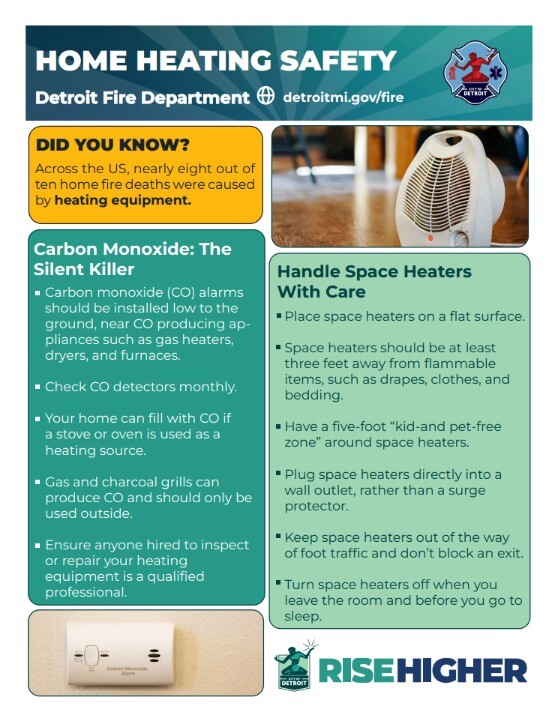
Space Heaters: Use Them Safely
Space heaters can provide supplemental warmth, but they also pose serious fire risks when used improperly. Keeping them away from combustible materials and following the manufacturer's instructions are essential to preventing fires.
The Detroit Fire Department urges residents to follow these precautions:
- Place space heaters on a flat, stable surface, never on tables or furniture.
- Keep heaters at least three feet away from anything that can burn, including curtains, bedding, clothing, furniture and paper products.
- Establish a five-foot “kid-and-pet-free zone” around every space heater.
- Plug heaters directly into a wall outlet. Never use an extension cord or power strip, which can overheat and create a fire hazard.
- Turn off heaters when leaving a room or going to sleep.
- Keep heaters clear of walkways and never block an exit.
- Inspect heaters for damaged cords or other signs of wear and follow the manufacturer's instructions.
“Space heaters need room to operate safely. Keep them away from newspapers, clothing, bedding and anything else that can catch fire, and never use an extension cord or power strip,” said Fire Marshal Don Thomas. “A heater that's too close to combustible materials or connected improperly can create a dangerous situation very quickly. Taking these precautions is a simple but important way to protect your home and family.”
Carbon Monoxide: The Silent Killer
Carbon monoxide (CO) is another serious hazard during the winter months. This invisible, odorless gas can be deadly when heating systems, furnaces or fuel-burning appliances malfunction or are used improperly.
In 2025, Detroit firefighters responded to 705 activated carbon monoxide alarms. Of those, 294 involved some type of carbon monoxide release.
DFD urges residents to follow these important CO safety tips:
- Install carbon monoxide alarms according to the manufacturer's instructions and applicable codes, including recommended locations and mounting heights.
- Test CO alarms regularly and replace them according to the manufacturer's recommended service life.
- Never use a stove, oven or grill as a source of heat.
- Keep gas and charcoal grills outdoors only, never in garages or enclosed spaces.
- Have heating systems, fireplaces and chimneys inspected and serviced by qualified professionals.
- Never ignore a carbon monoxide alarm. If it sounds, get everyone outside to fresh air and call 911 from a safe location.
“People often assume that if their furnace or fireplace worked fine last year, it's safe this year—but that isn't always the case,” said Thomas. “We encourage residents to have their systems inspected before the heating season, and make sure they have working carbon monoxide alarms. If an alarm sounds, get outside and call for help. Carbon monoxide is odorless and invisible, so you cannot rely on your senses to detect it.”
Know the Facts
According to the NFPA, home heating equipment is a significant contributor to residential fires and fire deaths nationwide. The organization has reported that:
- Heating equipment is a leading cause of home fires and associated deaths.
- Half of all home heating fires occur during December, January and February.
- Space heaters account for a disproportionate share of fatal home heating fires relative to the fires they cause.
These risks are not just statistics. Yesterday's deadly fire in Detroit is a painful reminder of the consequences that can follow when heating equipment is used unsafely. DFD encourages residents to take these precautions seriously before temperatures drop further and heating equipment sees more frequent use.
DFD Expands Fire Safety Education Through Community Risk Reduction
The Detroit Fire Department continues to strengthen its efforts to keep residents informed, prepared and safe through prevention and education.
“This year, we launched our Community Risk Reduction initiative to bring district-specific data and targeted fire safety education directly into the neighborhoods we serve,” said Commissioner Simms. “By meeting residents where they are and tailoring our outreach to the unique needs of each community, we can help more people understand their risks and take steps to prevent fires before they happen.”
Through its Community Risk Reduction, Fire Prevention and Public Education initiatives, DFD partners with schools, neighborhood groups and senior centers to share information about fire prevention, safe heating practices and emergency preparedness.
Residents are encouraged to test their smoke and carbon monoxide alarms, replace units that have reached the end of their service life, and review home escape plans with everyone in the household.
For more fire safety information, home heating safety tips or to schedule a Community Risk Reduction presentation in your neighborhood, visit detroitmi.gov/fire.