
City of Detroit reports updated revenue estimates for Fiscal Years 2027-2031
- Forecast: Detroit’s economy continuing to show encouraging signs in challenging macroeconomic environment
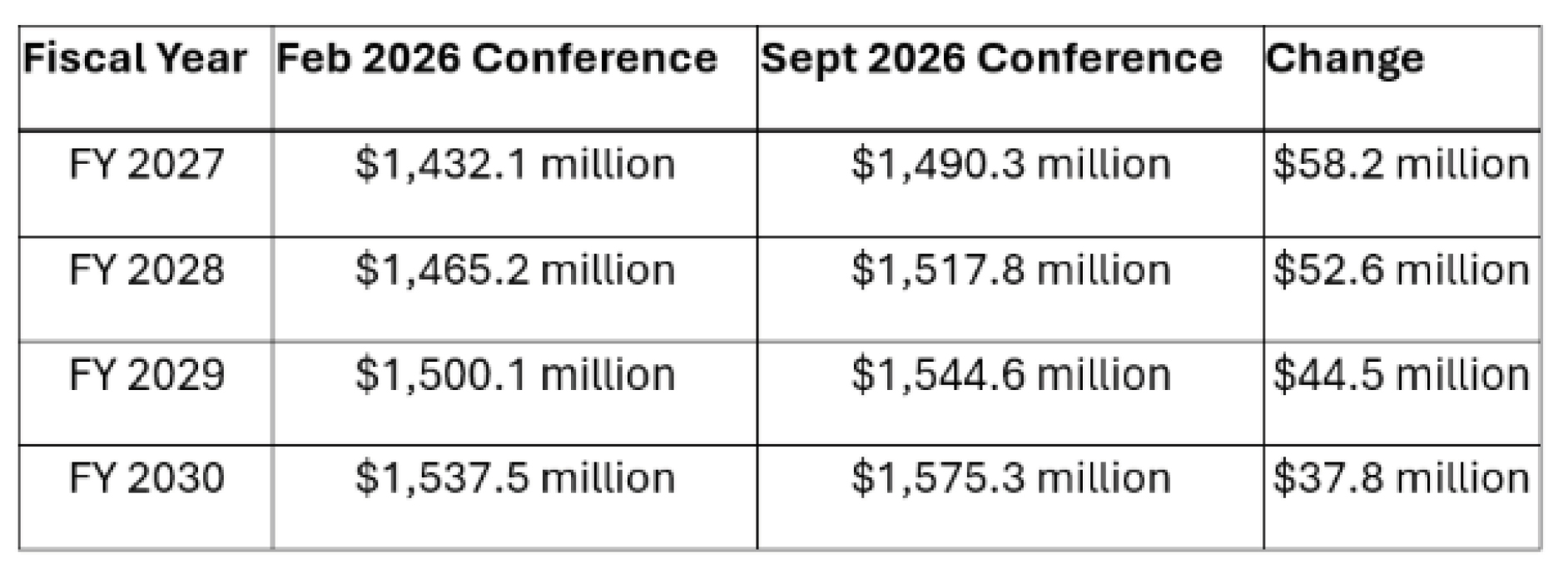
- The September recurring General Fund revenue estimates total $1.5 billion in the 2027 Fiscal Year, up $58.2 million from the February 2026 conference estimates. Wagering tax, income tax, and property tax revenue continue to exceed projections
On September 11, the City of Detroit held its regular biannual Revenue Estimating Conference to receive an update on the Detroit economic outlook and to approve updated economic and revenue forecasts for the remainder of fiscal year 2027 and for fiscal years 2028 through 2031. State law requires the City to hold independent revenue conferences in September and February each fiscal year to set the total amount available for its annual budget and four-year financial plan.
The Detroit Economic Outlook for 2025-2031 released this week, projects that Detroit will see solid labor force growth and wage increases for not only jobs in the City, but also among Detroit residents. The forecast is prepared by the City of Detroit University Economic Analysis Partnership, which is a collaboration of economic researchers from the City, Wayne State University, Michigan State University, and the Research Seminar in Quantitative Economics (RSQE) at the University of Michigan.
The report notes:
“Despite the many risks to our forecast, we expect Detroit’s economy to continue expanding over the next several years. We project employment to surpass its pre-pandemic level and the unemployment rate to decline modestly. We are also forecasting solid labor force growth, and for real wages to increase both at jobs located in the city and among Detroit residents, even amid elevated inflation. Taken together, we believe our forecast points to an encouraging outlook for Detroit’s economy in the years ahead.”
According to the forecast:
- Average annual wage growth is projected at 4.2% for residents and 3.3% for city payroll jobs through 2031.
- Payroll employment is projected to grow by an average of 0.4% annually from 2027 through 2031.
- Resident employment increased by 1.6% over the past year, even as statewide numbers dropped.

Revenue Estimating Conference Results
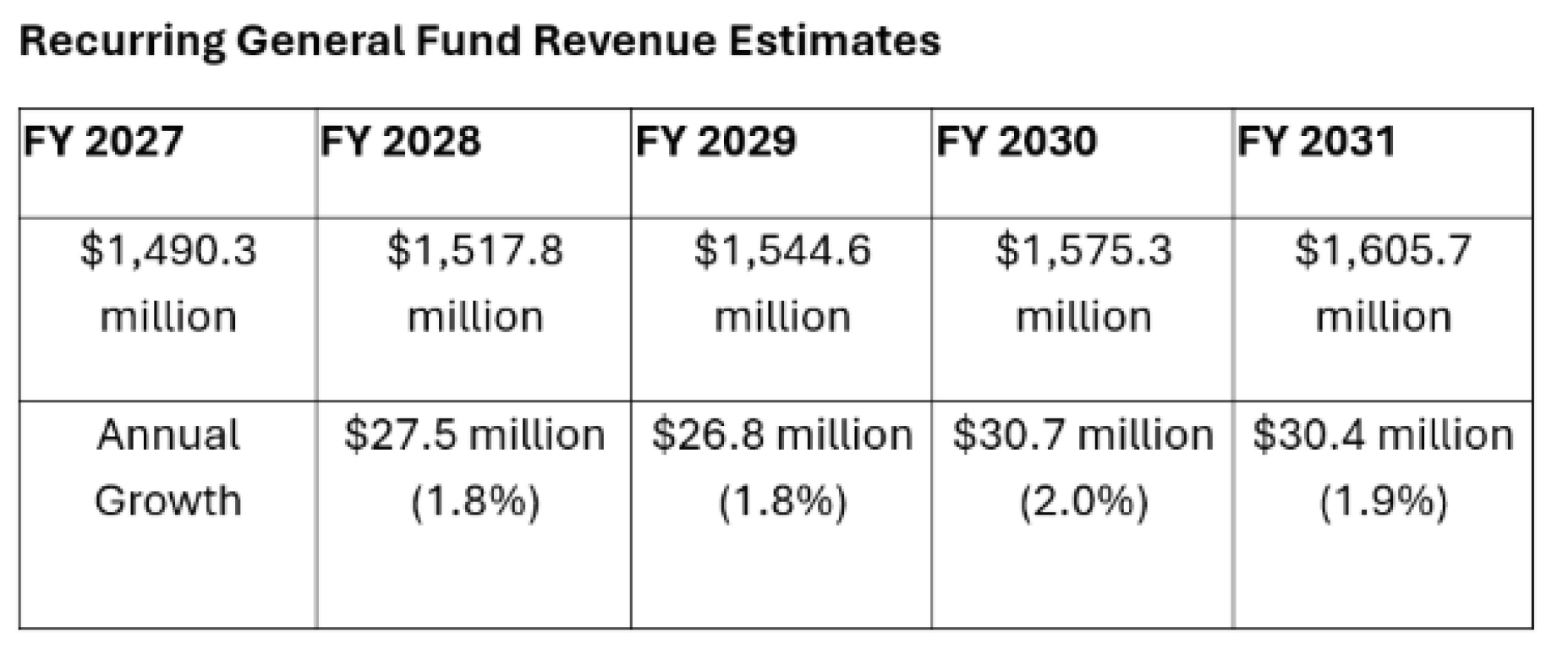
For the September Revenue Conference, participants updated the FY2027 General Fund recurring revenue estimate to $1.49 billion. This is $58.2 million higher than the February 2026 forecast of $1.43 billion for the fiscal year ending June 30, 2027. The increase is driven primarily by the wagering, income and property taxes.
General Fund recurring revenues for FY2028, which begins July 1, 2027, are forecasted at $1.52 billion, an increase of $52.6 million over the previous conference estimate in February 2026. This higher projection is due to expectations stemming in part from the continued growth of the major taxes, coupled with stability from other general fund revenues. The out-year forecasts for FY2028 through FY2031 show continued overall revenue growth of about 1.9% per year.
"We are very encouraged by these latest numbers, which show Detroit continues to keep its financial house in order, and that despite some economic uncertainty nationally, the city expects to see continued growth in employment, labor force and wages,” said Mayor Mary Sheffield.
City of Detroit Chief Financial Officer, Tanya Stoudemire says, “our latest economic numbers prove that Detroit’s job market is strengthening, and our residents are seeing real progress with resident employment rising and wages projected to grow 4.2% annually through the forecast.” “However, while the revenue forecast is favorable, it is critical that we remain disciplined and balance these gains against other cost pressures within the City's budget to ensure long-term financial stability.”
The City will use the updated estimates approved today to start developing the City’s FY2028 Budget and FY2028 through FY2031 Four-Year Financial Plan. The voting conference principals are Tanya Stoudemire, the City’s Chief Financial Officer; Eric Bussis, Chief Economist and Director, Office of Revenue and Tax Analysis, Michigan Department of Treasury; and George A. Fulton, PhD, Director Emeritus, Research Professor Emeritus, Research Seminar in Quantitative Economics (RSQE), Department of Economics, University of Michigan.
To review past Revenue Estimating Conference Reports visit Revenue and Economic Reports on the Office of Treasury’s website.
September 2026 Revenue Conference – Detroit Economic Outlook Slides
September 2026 Revenue Conference – Revenue Estimate Slides
September 2026 Revenue Conference meeting – VIDEO RECORDING